
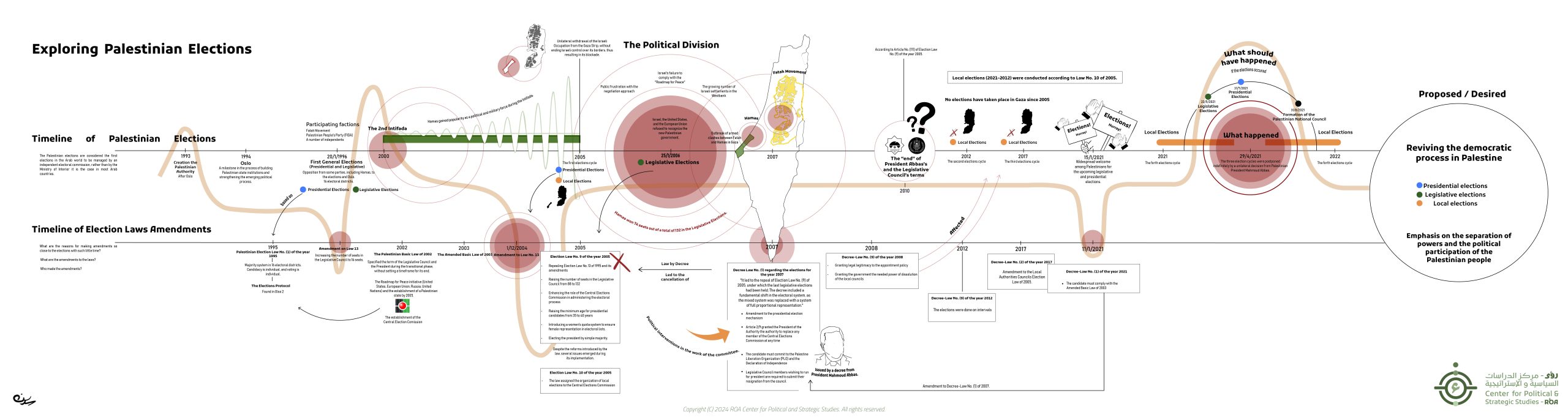
This paper explores the Palestinian Elections within the Palestinian historical context, and focuses on structural challenges, and political dynamics that have hindered democratic renewal. It highlights the complex interplay of internal divisions, Israeli occupation, and international influences that shape the feasibility and legitimacy of elections in Palestine. Drawing on lessons from past presidential, legislative, and local elections, the study offers insights and recommendations for overcoming obstacles and reviving democratic participation in the Palestinian territories.
Timeline of Palestinian Elections
About the Author:
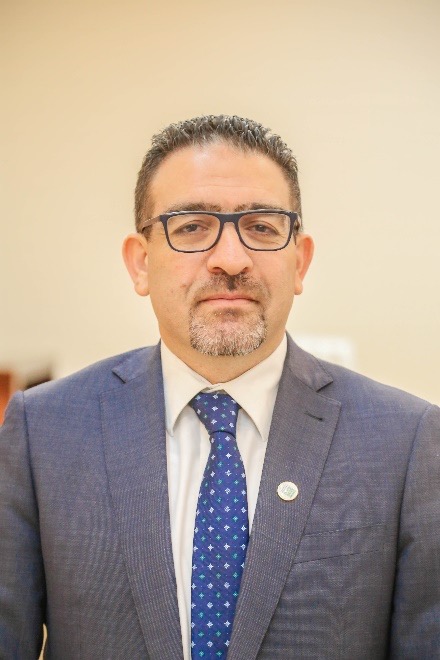
Dr. Ammar Dwaik
Dr. Ammar Dwaik is the Director General of the Independent Commission for Human Rights. He holds a Ph.D. in Social Policy and Management from Brandeis University (USA), a Master’s degree in Law and Government from the American University in Washington, and a Bachelor’s degree in Law from Yarmouk University in Jordan.
Between 2004 and 2006, he served as the Executive Director of the Palestinian Central Elections Commission, where he oversaw the administration of the 2005 presidential elections and the 2006 legislative elections. He also teaches part-time at Birzeit University and the Arab American University. Dr. Dwaik has authored numerous legal studies and policy papers, and has contributed to drafting and preparing legislative bills and regulatory frameworks. He has also provided local and regional consultations in the fields of human rights, legal reform, elections and their administration, and public administration.
