RO'A Center

About RO'A Center

From Insight to Institution: Milestones Shaping RO'A and Bridging Insights

Who We Are

RO'A Center for Political and Strategic Studies RO'A Center for Political and Strategic Studies is a Palestinian nonprofit organization based in Ramallah, established in early 2024 by researchers and practitioners. Rooted in principles of justice, inclusivity, and self-determination, RO'A serves as a collaborative vessel for Palestinian, regional, and international actors to address political, social, geographical, and intellectual fragmentation and erasure resulting from the prolonged Israeli occupation.

The founders, Fatina Hodali and Ashraf Khatib, have initiated efforts in conflict resolution since 2020 as members of the founding team of Bridging Insights (BI). With five renowned academic teams, BI in collaboration with Harvard Kennedy School created the "WHY IT WORKED" research — a conflict resolution toolkit that helps diagnose conflict systems and design scalable interventions.

RESEARCH SURVEYS 2021 2022 2023 2024 2025 NOW 2026
METHODOLOGY Theory
of
Change

RO'A's two strategic pillars are; first, the Evidence-Based Research and second, the Engagement, Outreach and Collaboration Programs, adopting a 'theory and practice' methodology. ROA's strategy is designed to include perspectives and insights of relevant partners and stakeholders.

Through ROA's theory and practice methodology that provides the cornerstone for relevant Palestinian stakeholders, ROA creates safe spaces where pluralism is harnessed for constructive change. These efforts build the foundations for equitable socio-political representation, intergenerational and cross-geographical cohesion, and stronger regional and international partnerships.

ROA has worked in close collaboration with the Folke Bernadotte Academy (FBA) to finalize its strategy, whilst also inviting experts, academics, civil society members, youth and political representatives.

THEORY Research
PRACTICE Engagement
OUR METHODOLOGY
CONTEXT

Our Strategy

The prolonged Israeli occupation of Palestine remains to be the root cause of challenges at political, social, economic, environmental, cultural, intellectual and other levels. Problems like weak political representation of civil society, monopoly of decision-making, exclusionary mindset, intergenerational and social groups gaps and scarcity of Palestinian platforms for knowledge and curation are examples of problems that are the outcome of the prolonged occupation. An additional challenge is the insufficient implementable ideas for frameworks for conflict resolution.

Since late 2023, Palestinian Israeli conflict dynamics have been brought back to the forefront of the international agenda, especially with the onset of the Israeli genocidal war on Palestine in general and on Gaza in particular with severe policies and violations in the West Bank. These changing dynamics have caused a significant impact on the socio-political well-being of Palestinians.

Simultaneously, even with the increase of Palestinian visibility in international forums, Palestinians still have no clear pathways, tools, or community engagement programs to turn this visibility into policy influence. The Palestinian impotence of crystalizing international visibility and exposure into influential policy extends beyond the ongoing conflict dynamics to encompass additional systematic challenges within the Palestinian civil society and the Palestinian political system.

KEY CHALLENGE

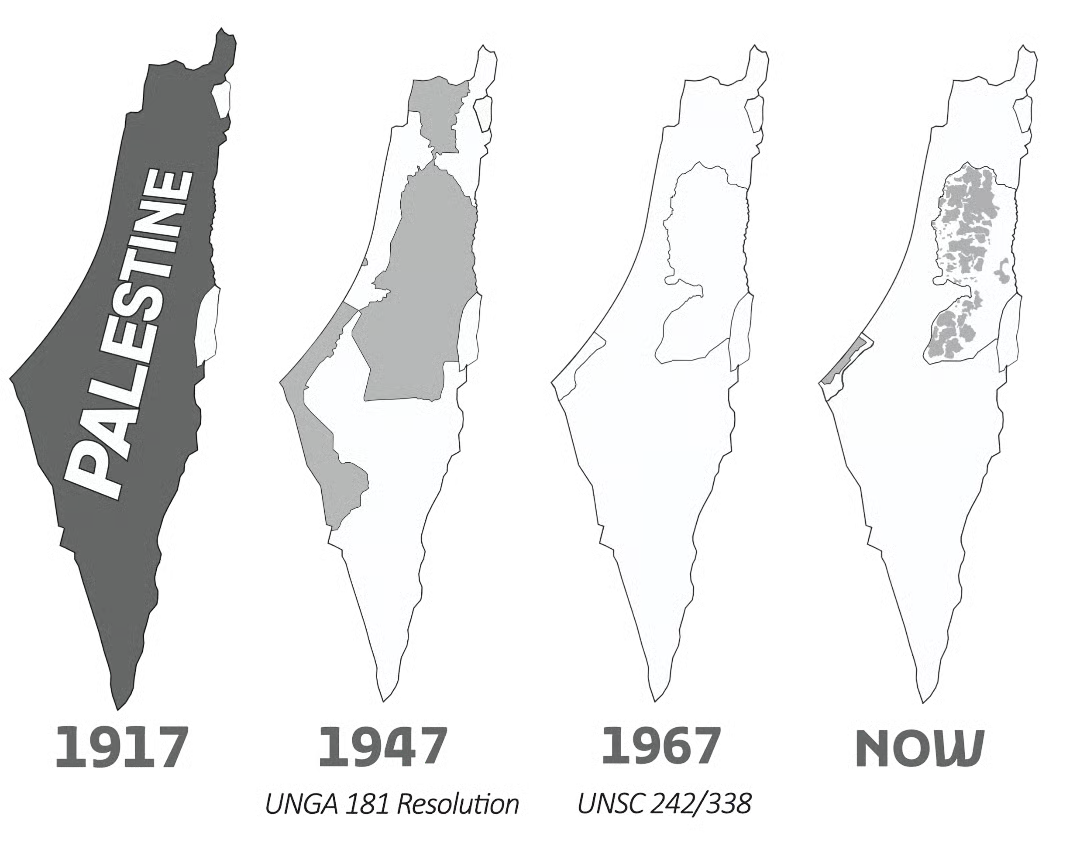
The Palestinian Society Is Facing Fragmentation and Erasure

PALESTINE Palestine map timeline

Political, social, economic, environmental, cultural, and intellectual fragmentation caused by prolonged occupation.

OUR FOUNDATION

Guiding Principles

Vision

To help shape a unified and dignified Palestinian society, founded on pluralism and justice, towards a free Palestine.

Mission

Our mission is to protect Palestinian presence by confronting all forms of fragmentation and erasure caused by the Israeli occupation through critical research and community-driven engagement.

Core Values

Hover over each value to learn more

Pluralism Justice Participation Integrity Innovation

RO'A GOALS

GOAL 1 The Civil Society is Represented and Integrated in the Palestinian Political Scene.
GOAL 2 Cohesive and Inclusionary Mindset in Palestinian Political Processes.
GOAL 3 Stronger and Cohesive Palestinian Social Fabric (Tackling Intergenerational and Social Group Gaps).
GOAL 4 Affirming the Palestinian Narrative Presence in Regional and International Civil Society Platforms.
GOAL 5 Creating a Palestinian Platform and Data-base for Research and Curation.
RESEARCH THEMES
  1. Decolonial and Critical Knowledge Production
  2. Political Landscape, Governance, and Geopolitical Analysis
  3. Society, Cohesion, and Memory
  4. Comparative Research and Conflict Resolution

YEAR IN REVIEW

2024 Highlights

A transformative year of research, engagement, and institution building that advanced RO'A's mission across all strategic pillars.

3

Research Publications

Major research papers published covering geo-political analysis, strategic planning, and historical retrospectives.

  • The Curse and The Blessing
  • Mapping the Future
  • After Two Decades
12+

Engagement Activities

Workshops, focus groups, and strategic planning sessions held across multiple Palestinian communities.

  • Community Resilience Workshops
  • Policy Analysis Training
  • Youth Leadership Programs
8

Partnerships Formed

New partnerships with international and regional organizations to advance research and engagement goals.

  • Folke Bernadotte Academy (FBA)
  • Regional Civil Society Networks
  • Academic Institutions
2

GIS Milestones

Interactive elections dashboards launched in both English and Arabic, compiling decades of electoral data.

  • Elections Dashboard (EN)
  • Elections Dashboard (AR)