Survey Overview
This report consists of four sections that together provide a comprehensive analysis of Palestinian perspectives on governance, national unity, and future political directions: Section (1) examines attitudes toward national unity and reconciliation, and levels of trust in different political actors. Section (2) analyzes perceptions of governance effectiveness and views on different political solutions to the Palestinian issue. Section (3) investigates the role of youth in national efforts and their political participation. Section (4) explores the perceived importance of Palestinians in the ‘48 territories and the diaspora. ❏ National unity remains a critical issue, with most Palestinians viewing elections as the primary means of achieving reconciliation. However, opinions on international involvement are divided—West Bank respondents largely reject external actors' influence, while Gazans show more openness, particularly toward regional players like Qatar. Despite these differences, there is consensus that Palestinian leadership must take initiative in fostering national unity. ❏ Governance continues to be a point of contention, particularly in the West Bank, where many respondents perceive the Palestinian Authority as ineffective in delivering services and representing public interests. In Gaza, trust in governance structures is comparatively higher, though uncertainty persists about the future role of political leadership. The public remains divided on whether existing institutions can successfully lead the Palestinian people toward stability and self-determination. ❏ Political solutions to the conflict remain widely debated; support for a two-state solution has increased in both the West Bank and Gaza, while belief in a one-state model with equal rights has declined. Views on potential confederations vary, with Gaza respondents showing greater openness to a confederation with Jordan while West Bankers are more skeptical. ❏ Youth political engagement is shaped by structural and psychological barriers, including fear of arrest and a lack of confidence in leadership. While Gazan respondents favor the formation of new youth-led parties, those in the West Bank prefer expanding youth roles within established political movements. ❏ There is strong recognition of the importance of Palestinians in the ‘48 territories and the diaspora, with many believing their involvement is necessary for shaping the national cause and political future. Conclusions: As Palestinians navigate a period of political uncertainty and ongoing conflict, national unity and governance remain pressing concerns. While many believe that reconciliation should be achieved through elections, trust in political leadership remains low, particularly in the West Bank. The effectiveness of governance continues to be debated, with calls for increased transparency and accountability growing louder. The search for a political resolution remains contentious, with fluctuating levels of support for different solutions. While the two-state model has seen renewed interest, overall confidence in political negotiations remains fragile. Meanwhile, youth engagement presents both a challenge and an opportunity, as many young Palestinians seek a greater role in shaping national efforts despite the barriers they face. The findings in this report provide crucial insights into public sentiment, highlighting the urgent need for inclusive governance, responsive leadership, and a renewed focus on political participation. As the Palestinian people look toward the future, these perspectives will play a vital role in shaping national strategies and policy directions.
Methodology
➔Target population:
◆WestBank (includingEastJerusalem) and GazaStrip
◆Aged 15 years or older
➔Size of samples:
◆West Bank-800 respondents from 87 random locations
◆GazaStrip-400 respondents from 34 random locations in the Deir AlBalah and Khan Younis governorates
Data collection approach:
Street-intercept surveys within counting areas
Face-to-face interviews
35 close-ended questions
Stratified random sampling in the West Bank
Quota sampling in the Gaza Strip (based on pre-war location of residence)
Why Quota Sampling inGaza?
Prior to the war, Gaza, like the West Bank, used to be divided into counting areas by the Palestinian Central Bureau of Statistics (PCBS).
The current war, which displaced over 80% of Gaza’s population, disrupted the “natural distribution” based on which counting areas were designed.
Counting areas have become irrelevant, because of the significant change in terms of population density and demographics.
In this context, quota sampling has the highest chance of producing a framework that represents the population in question based on a number of factors that researchers choose. In our case, we used governorate of residence before the war, gender and age.
Once quotas have been decided, enumerators were dispersed to collect responses from 39 areas until each of the quotas is completed.
Key Findings
Endorsing national unity and achieving reconciliation
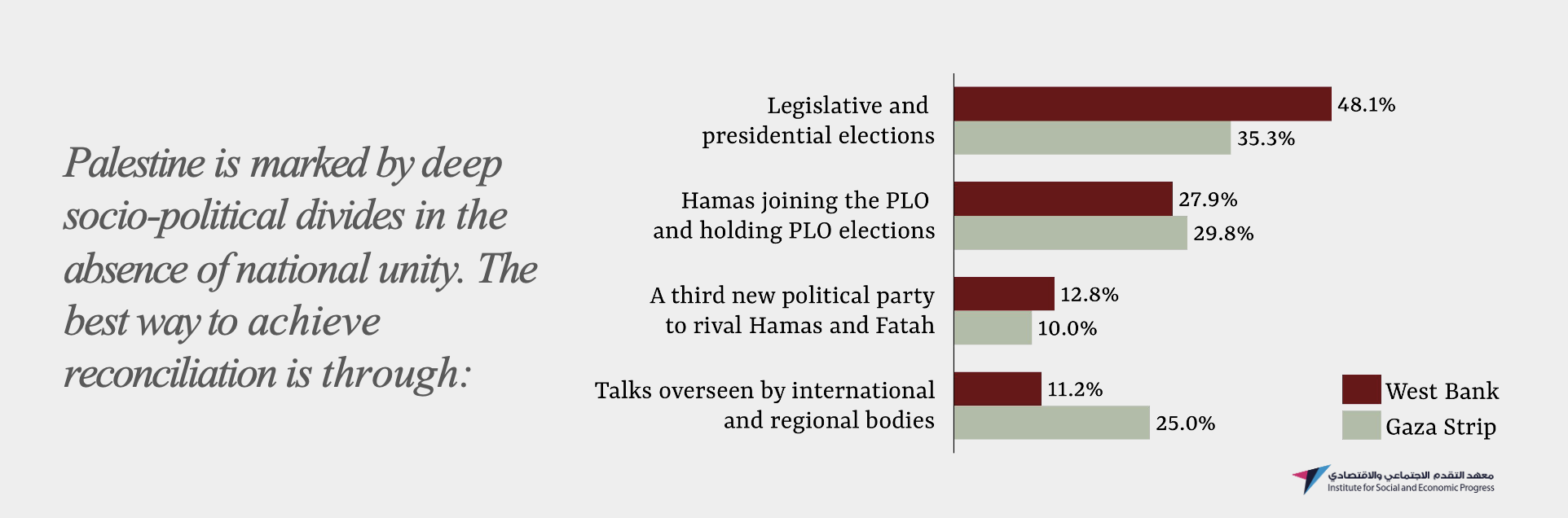
There is a consensus between respondents in Palestine that the best way to achieve reconciliation is through elections
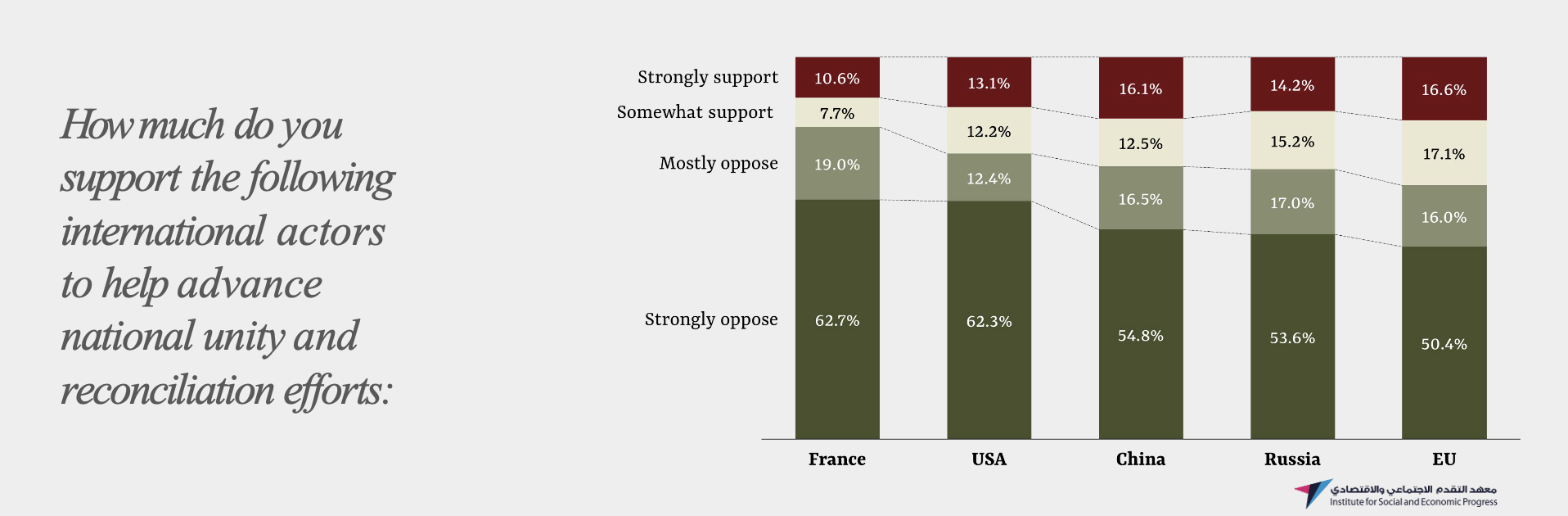
Respondents in the West Bank overwhelmingly oppose international actors’ involvement in national reconciliation efforts
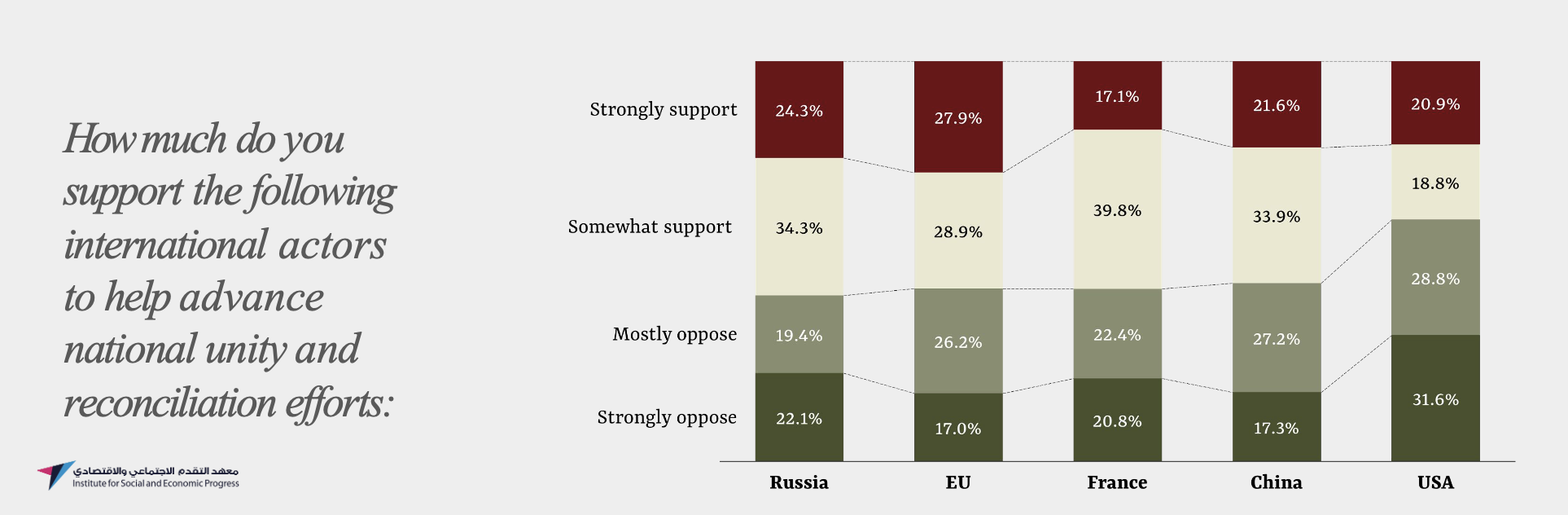
…respondents in the Gaza Strip, however, seem more divided on the issue, but they are still responding unfavorably to US involvement
Majority of West Bank respondents look favorably upon Qatar’s involvement in unity and reconciliation efforts
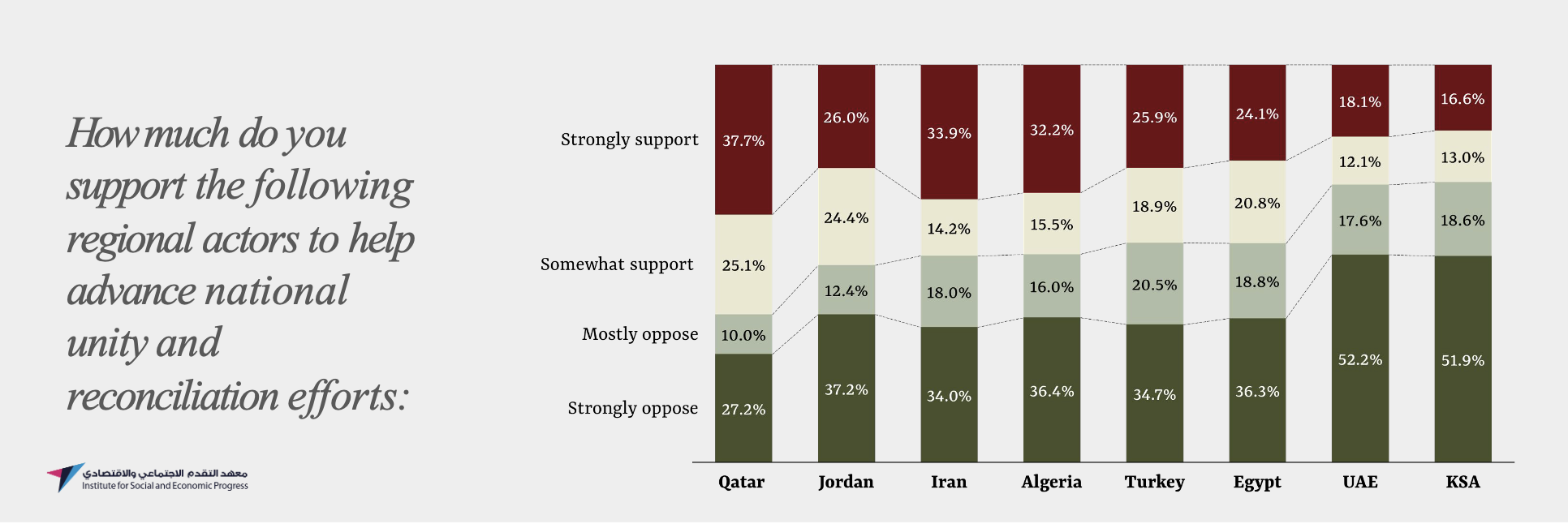
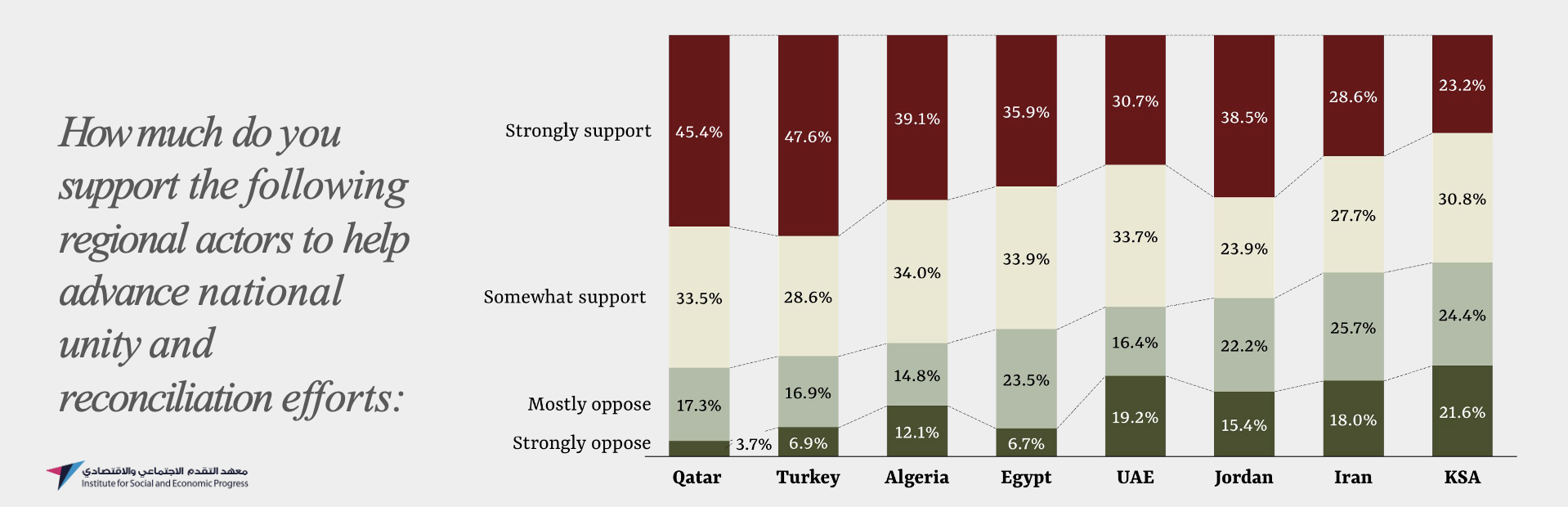
…while respondents in the Gaza Strip are generally more supportive of regional involvement in unity and reconciliation efforts
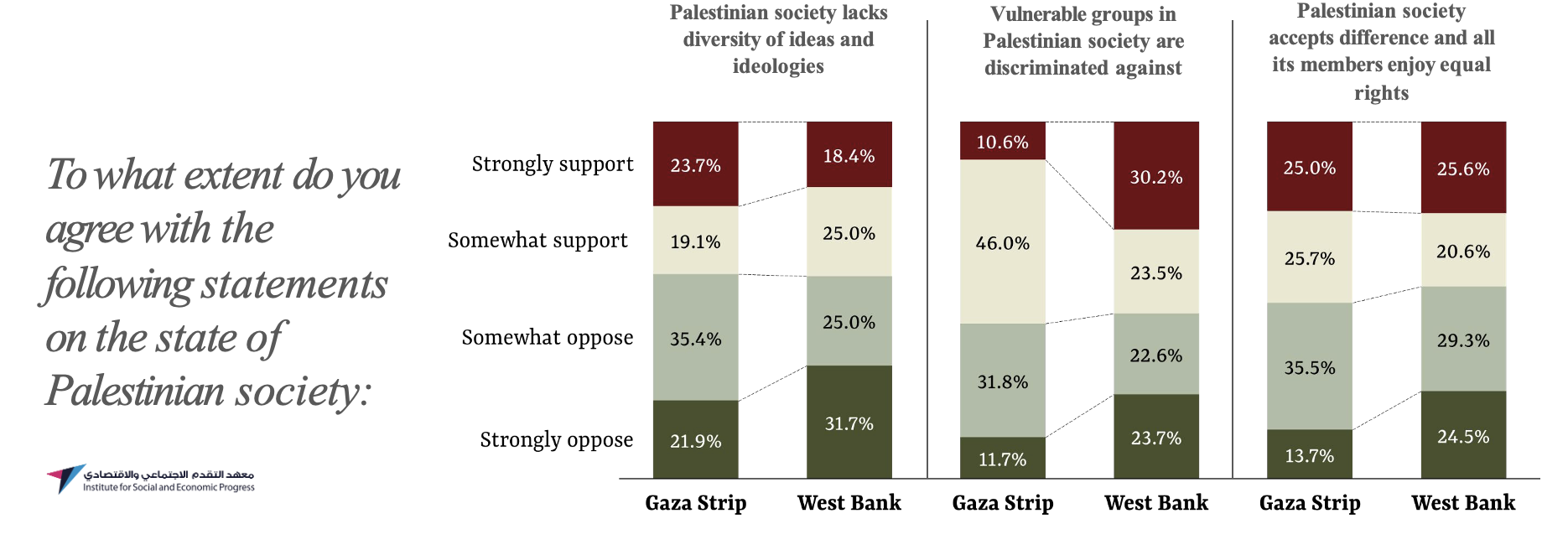
West Bank and Gaza Strip respondents’ views on Palestinian society are roughly the same
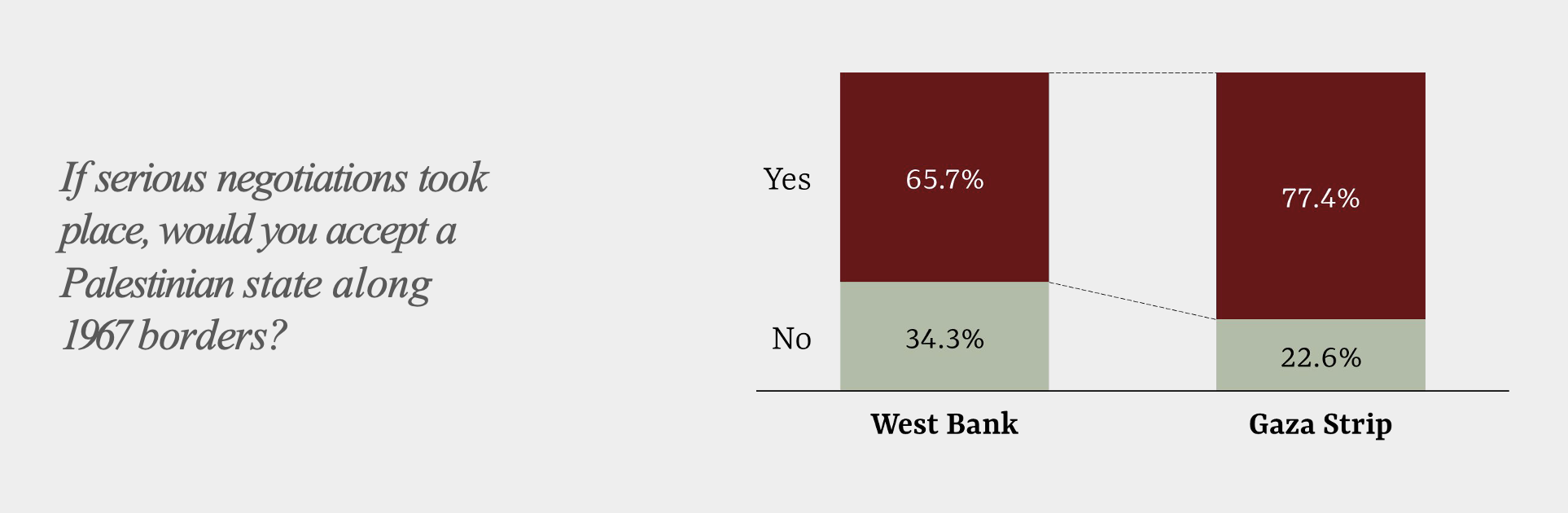
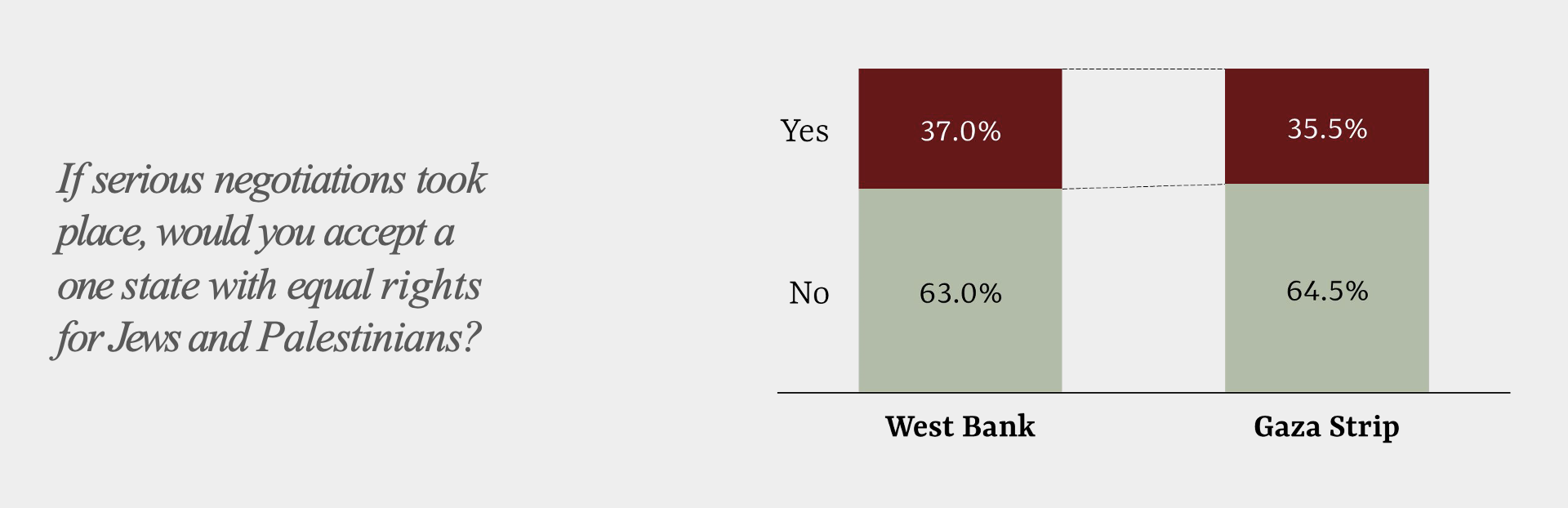
Majority in both the West Bank and the Gaza Strip show willingness to accept a two-state solution
…however, the one-state solution remains unpopular
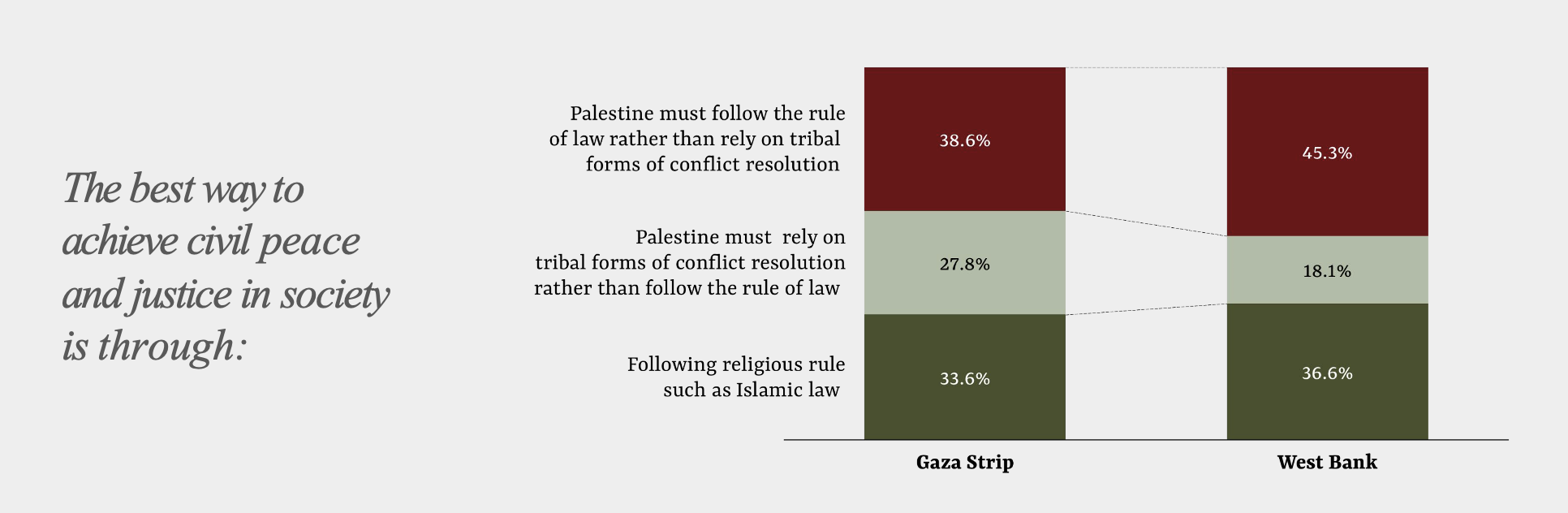
Respondents in Palestine are divided on what the best way to achieve civic peace is
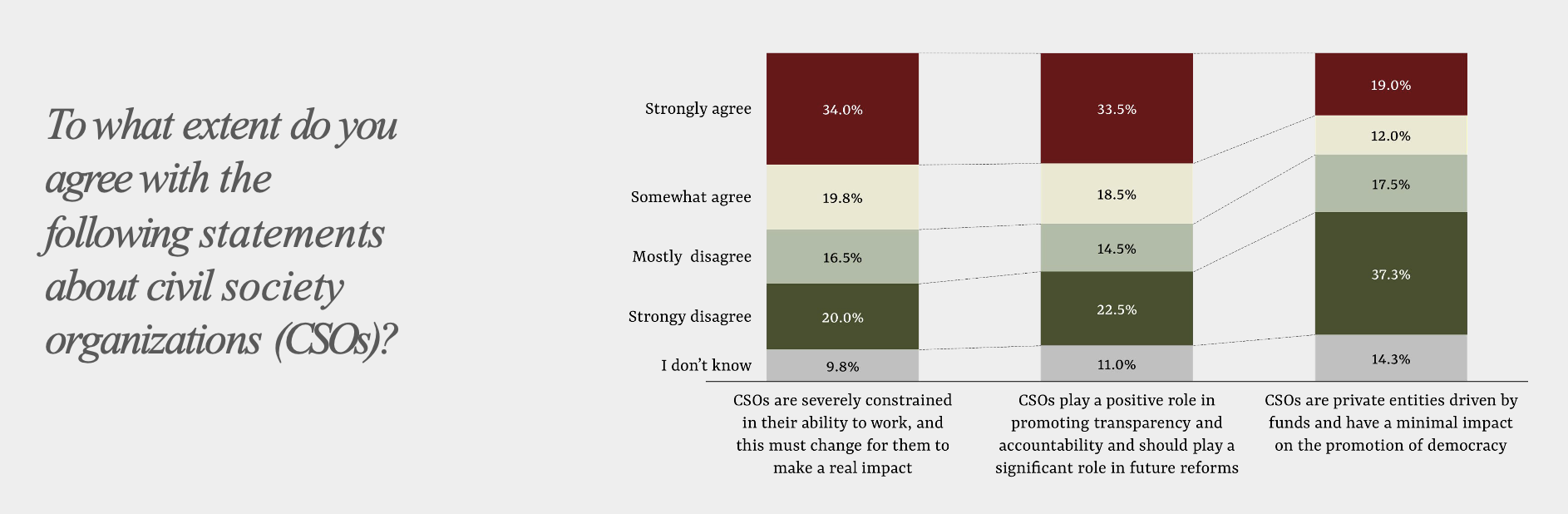
Just over half of West Bankers view the impact of civil society as positive, and believe that CSOs’ ability to function is constrained
Enhancing political leadership and trust between the people and the leadership
Less than half of West Bankers trust their national government, and one in three trust their local council
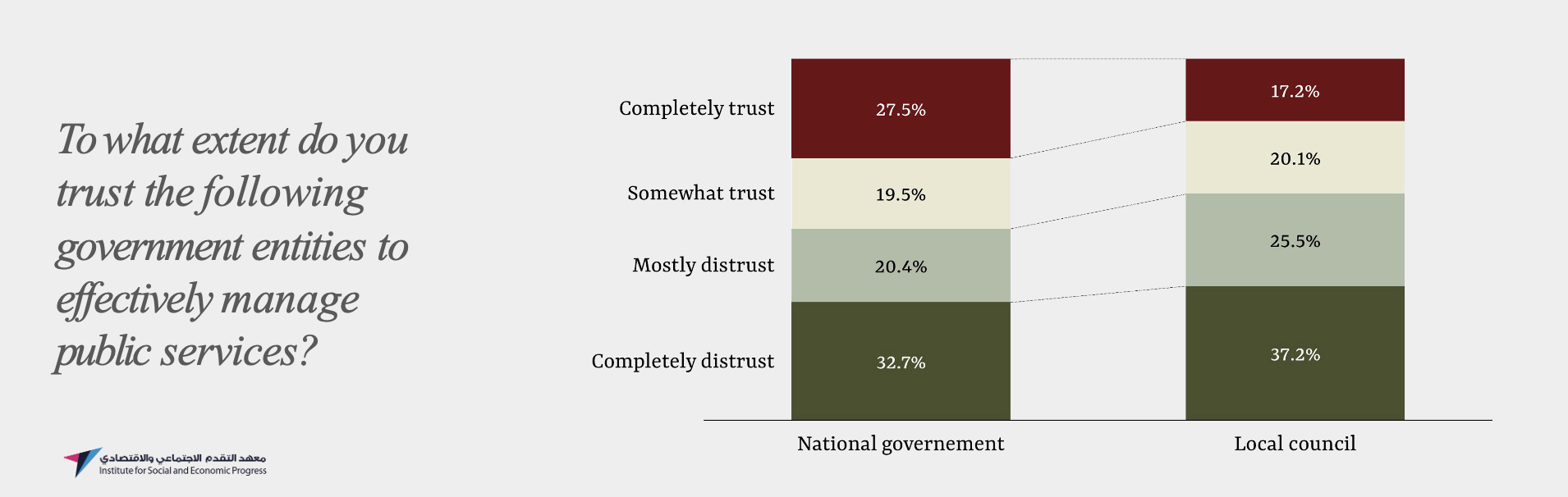
…respondents in the Gaza Strip have more trust in the PA government and their local council, and little trust in Hamas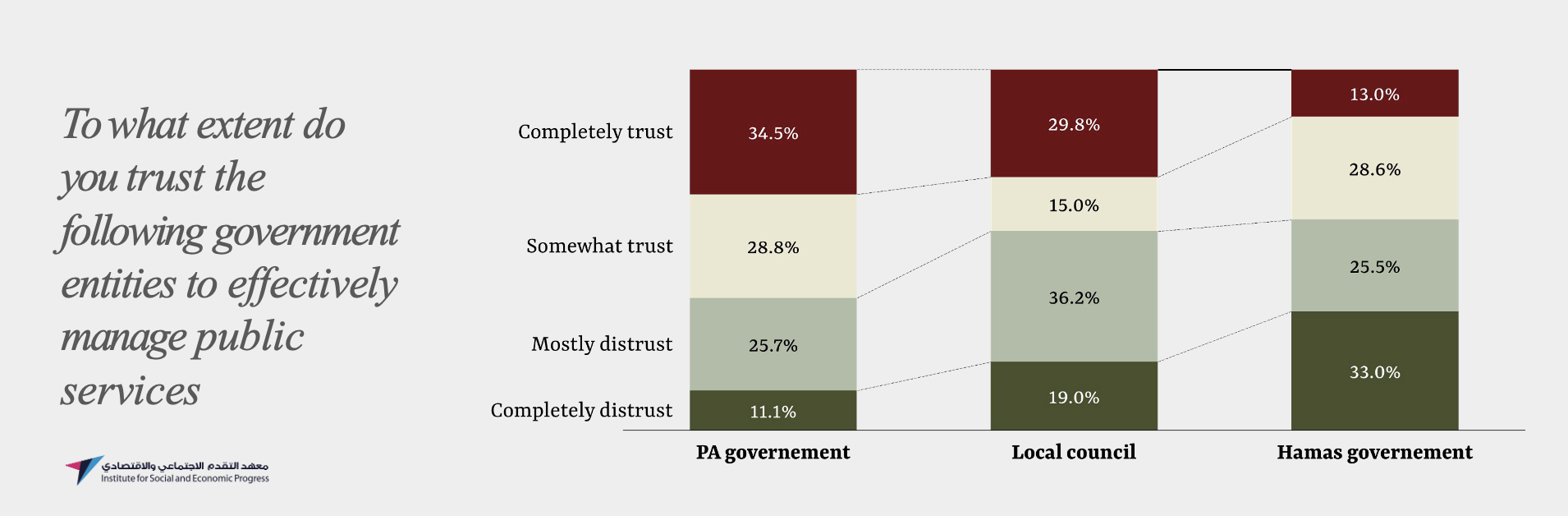
Two in three West Bankers believe that the PA is ineffective at providing basic needs, representation abroad and policymaking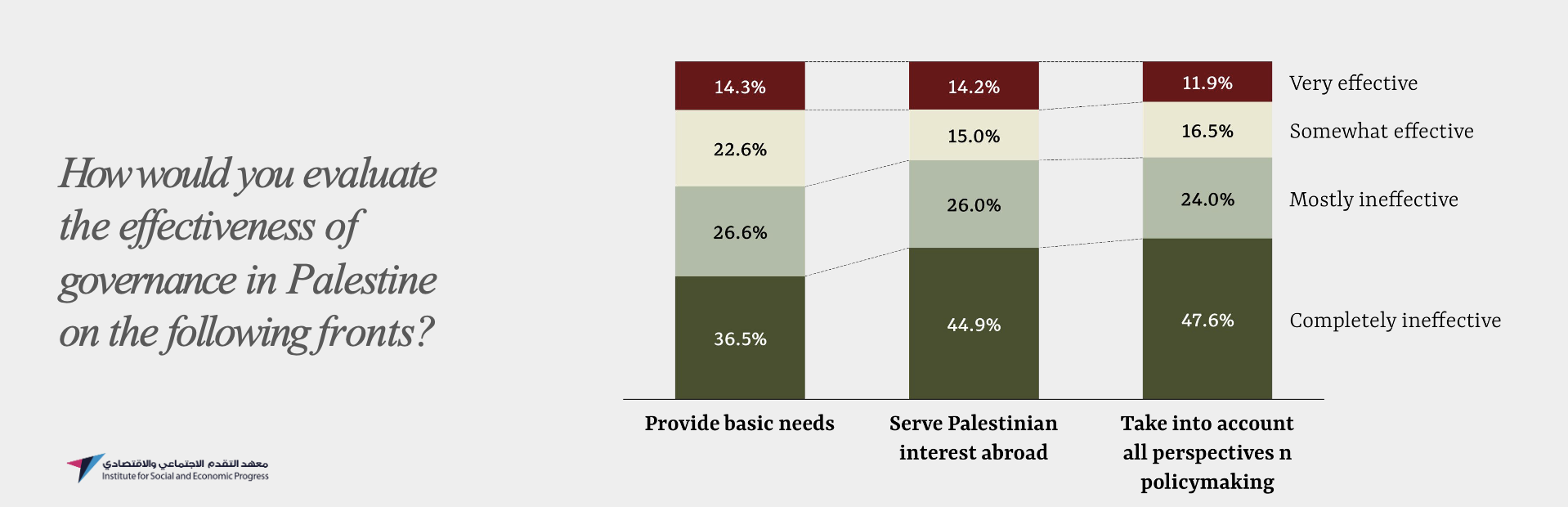
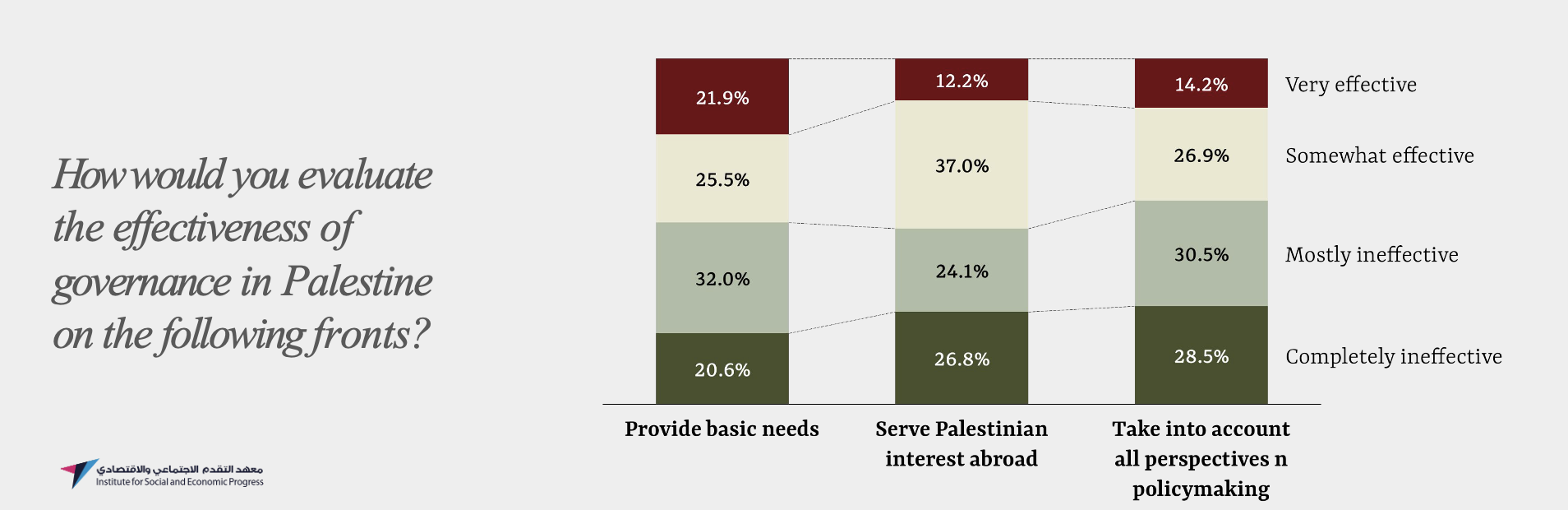
Respondents in the Gaza Strip have a more positive outlook on the effectiveness of governance
Respondents in the Gaza Strip are more likely to think Fatah is serious about reconciliation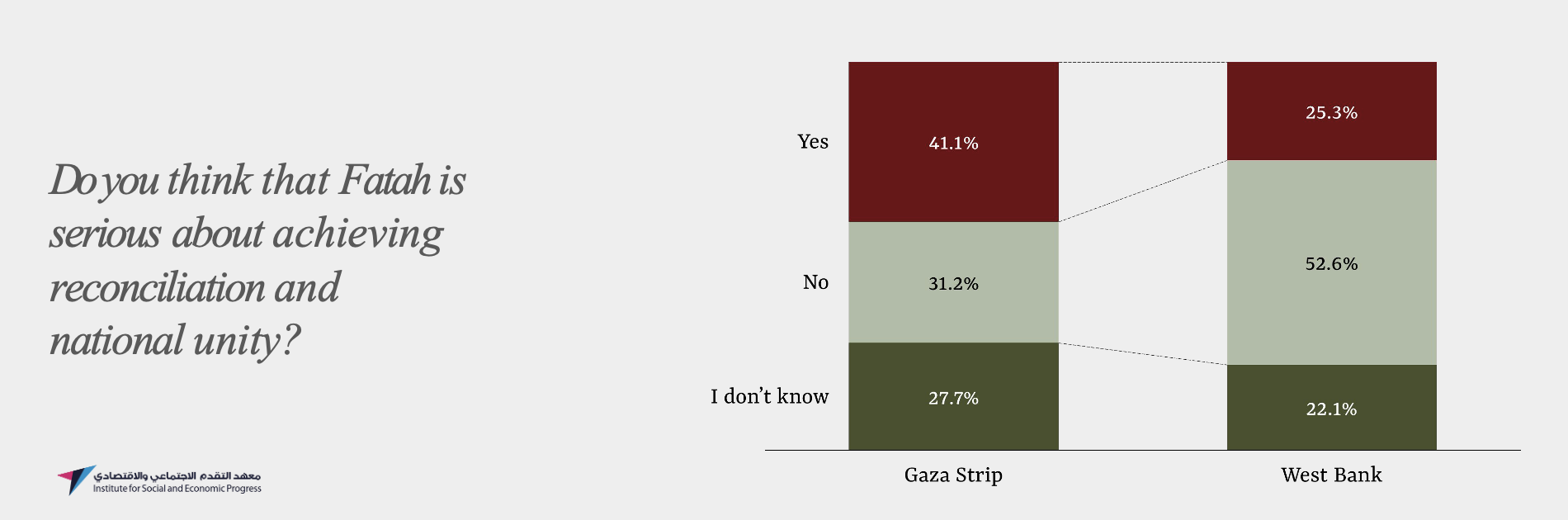
…with the opposite being true in regard to Hamas’ seriousness; over half of respondents in the West Bank think it is serious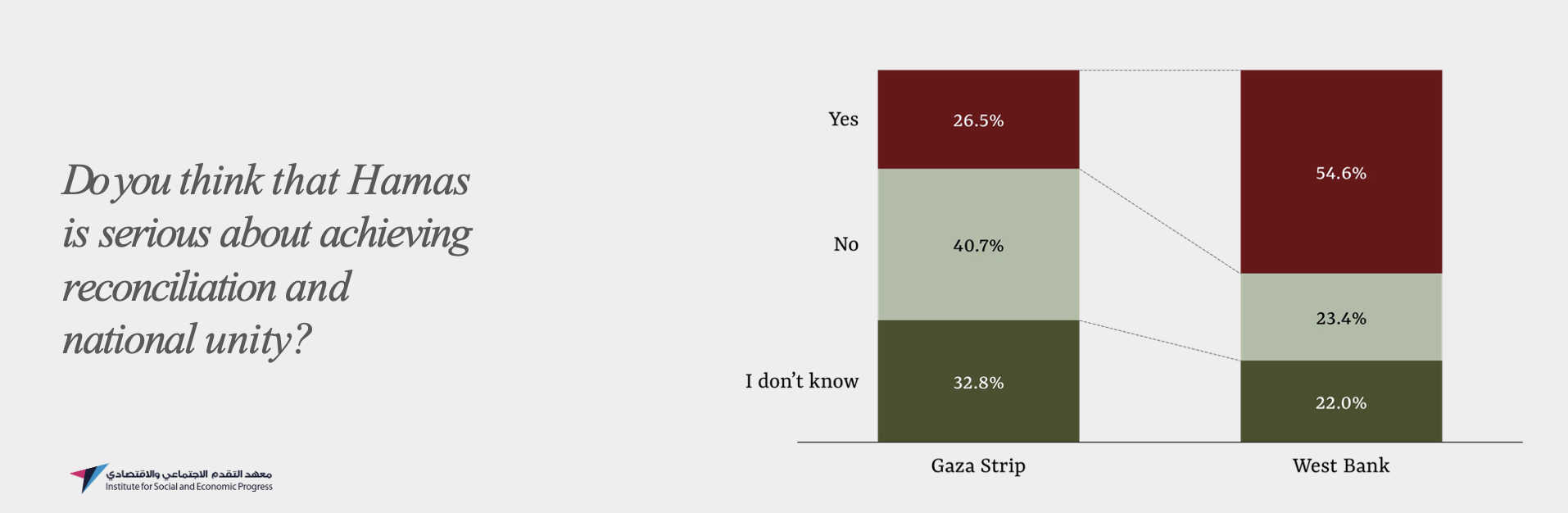
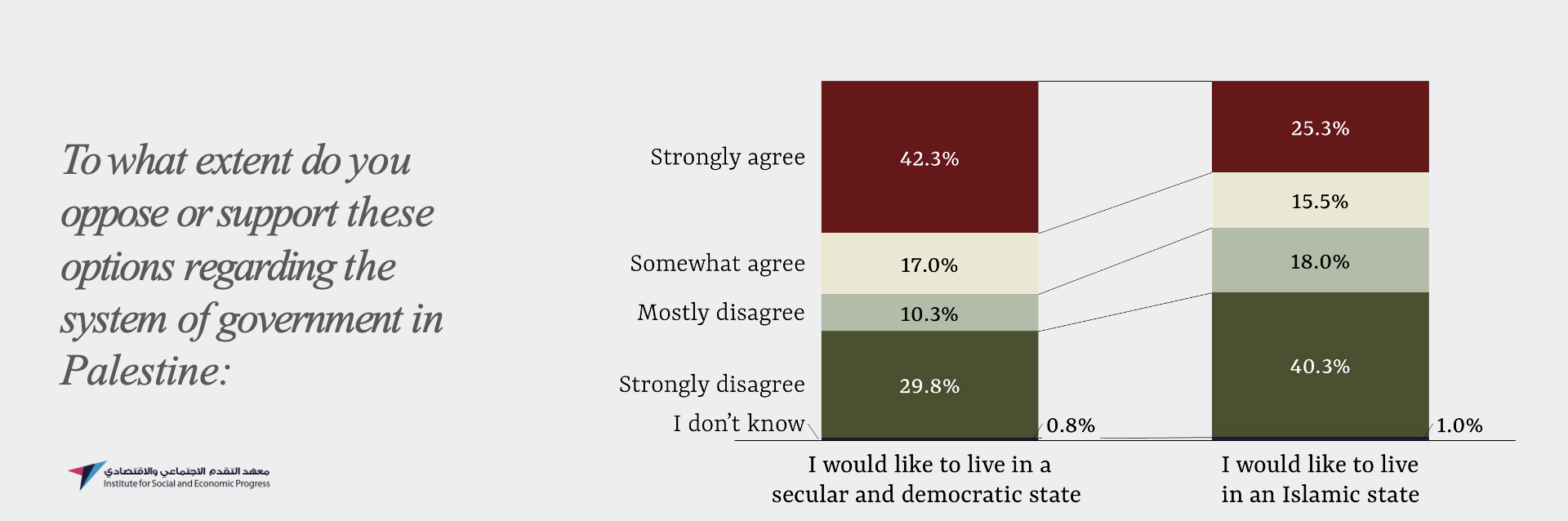
Majority of respondents in the West Bank would like to live in a secular and democratic state
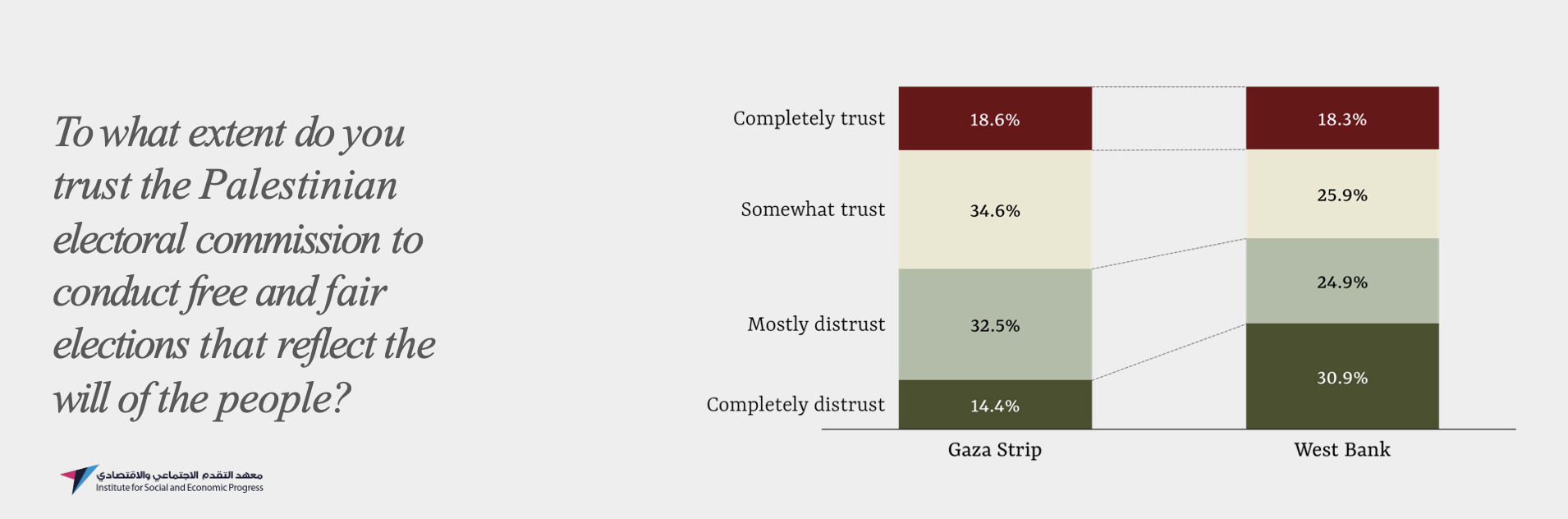
Respondents in Palestine are divided on how much they can trust the Central Elections Commission
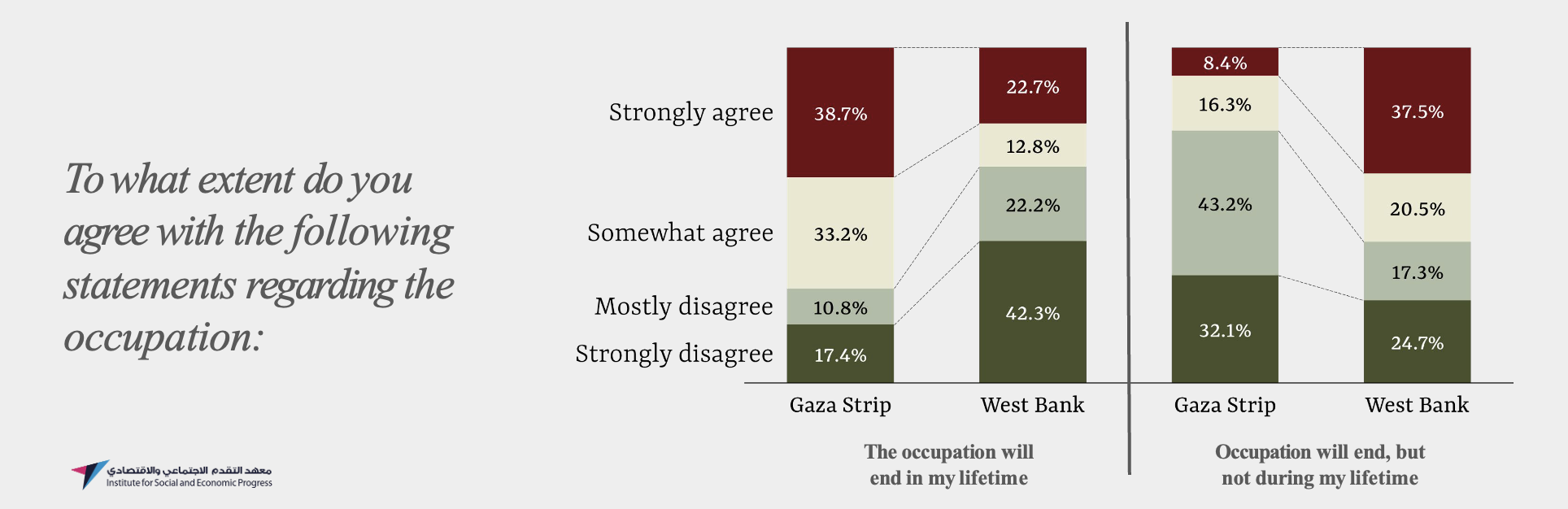
While most believe that occupation will eventually end, respondents in the Gaza Strip are more hopeful it will happen in their lifetime
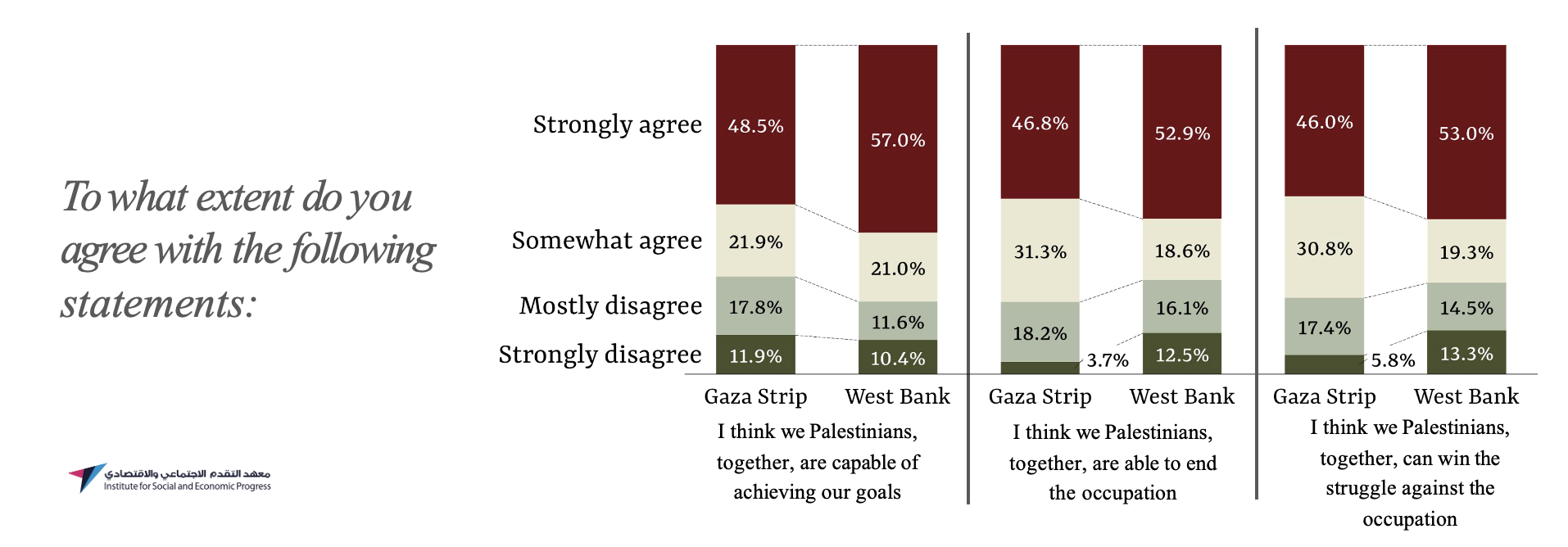
Palestinians are hopeful that together they can end the occupation and achieve their national aspirations
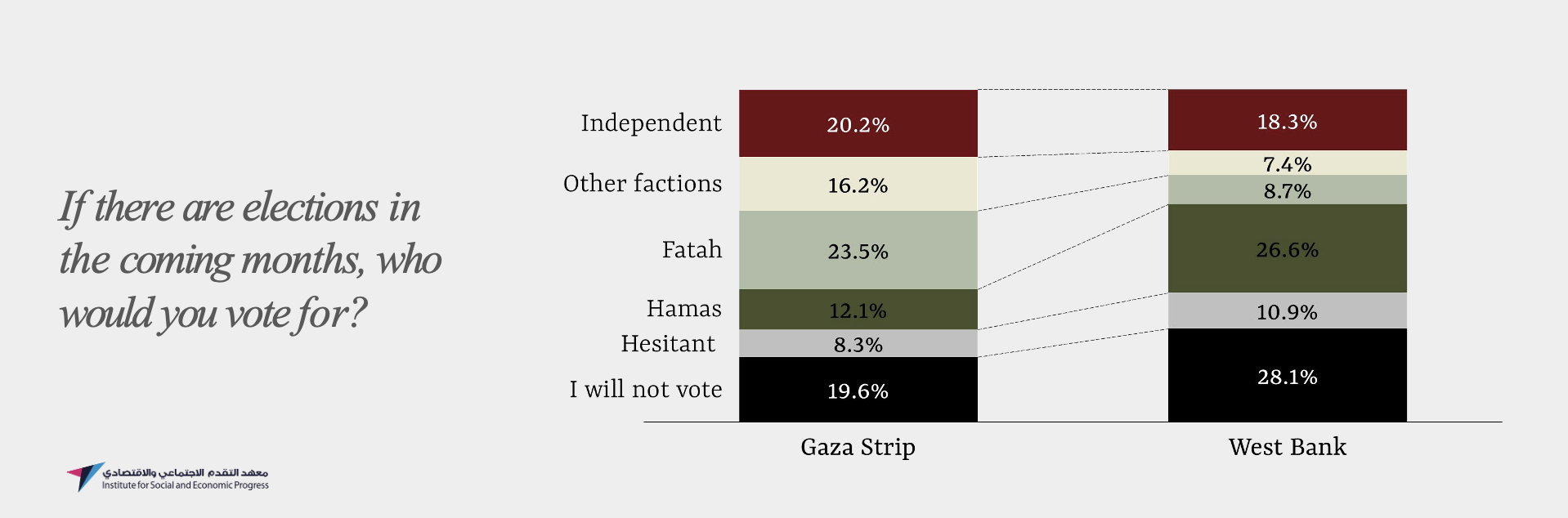
In an upcoming election, Fatah and Hamas will struggle to mobilize support, but Hamas remains relatively popular in the West Bank
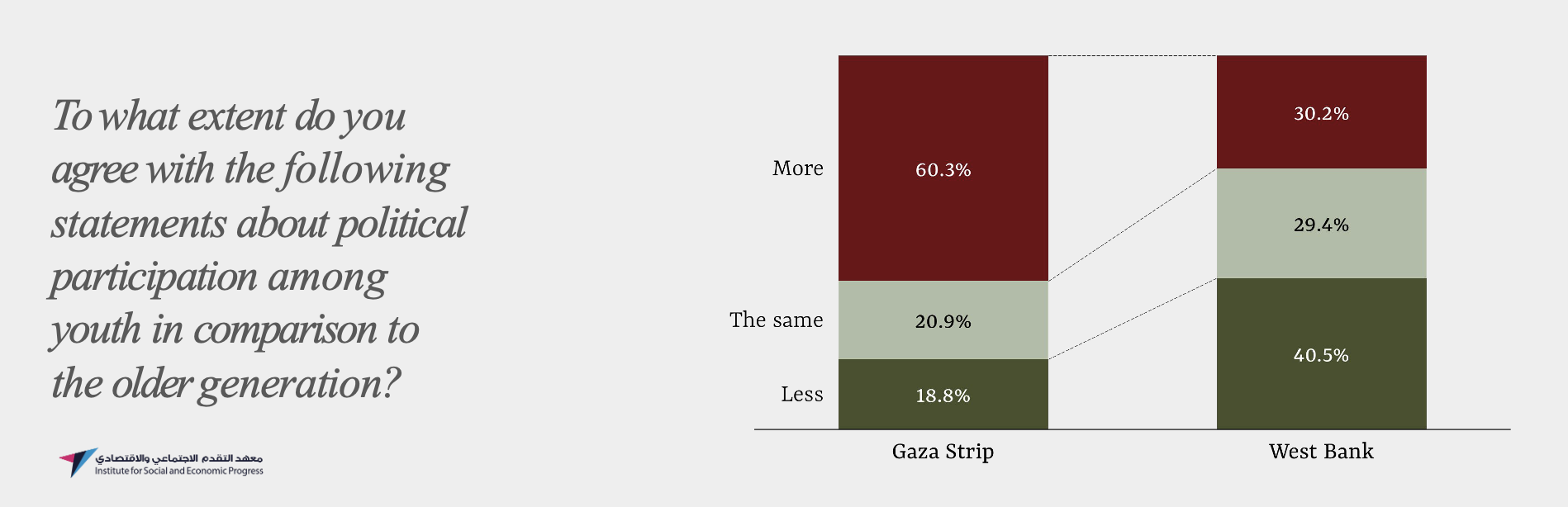
Empowering youth in national efforts
Gazans think the youth are more politically active than the older generation, but opinions in the West Bank are more divided
…with fear of arrest and lack of confidence in leadership being the most cited as reasons for the youth’s lack of participation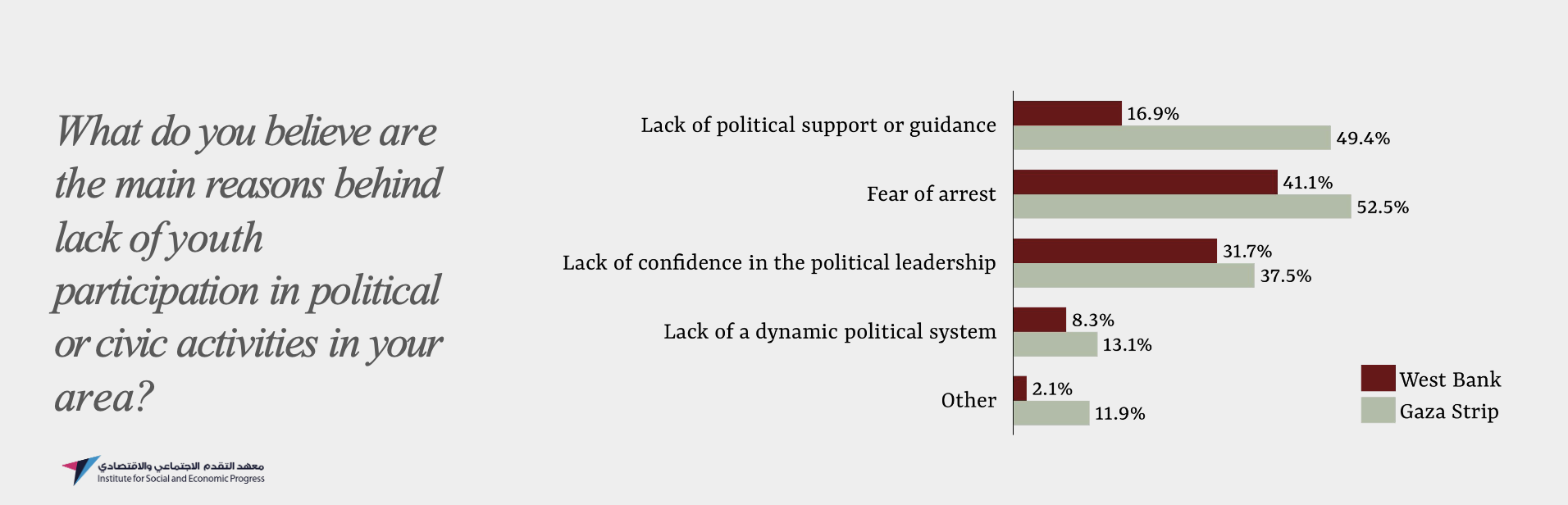
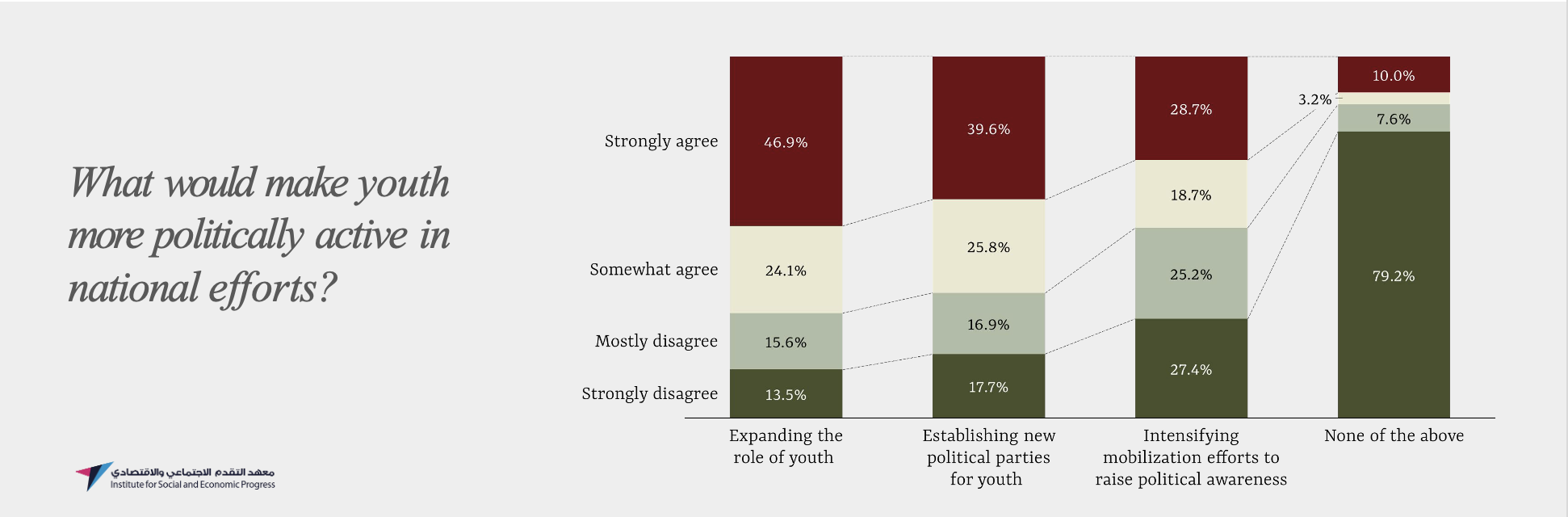
Establishing new youth parties is perceived as the most effective way to boost youth participation in politics in the Gaza Strip
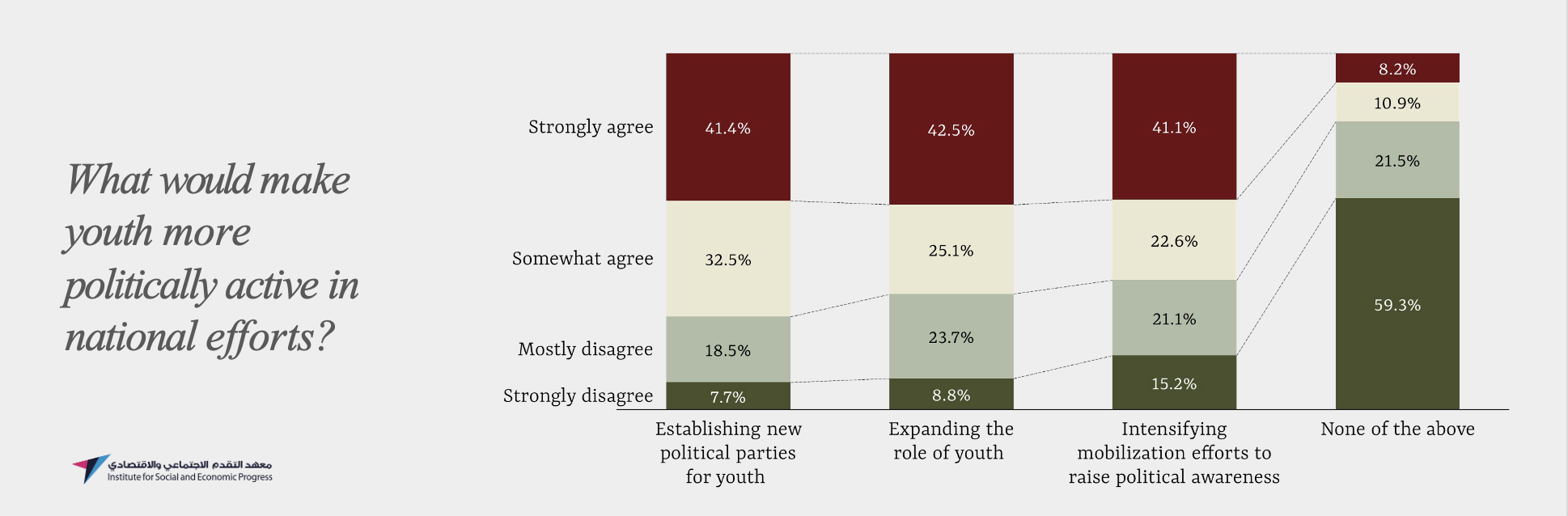
…while respondents in the West Bank think expanding the role of youth in existing parties would boost engagement in nationally
Promoting the Palestinian narrative and fostering communication with Palestinians of 1948 and in the diaspora
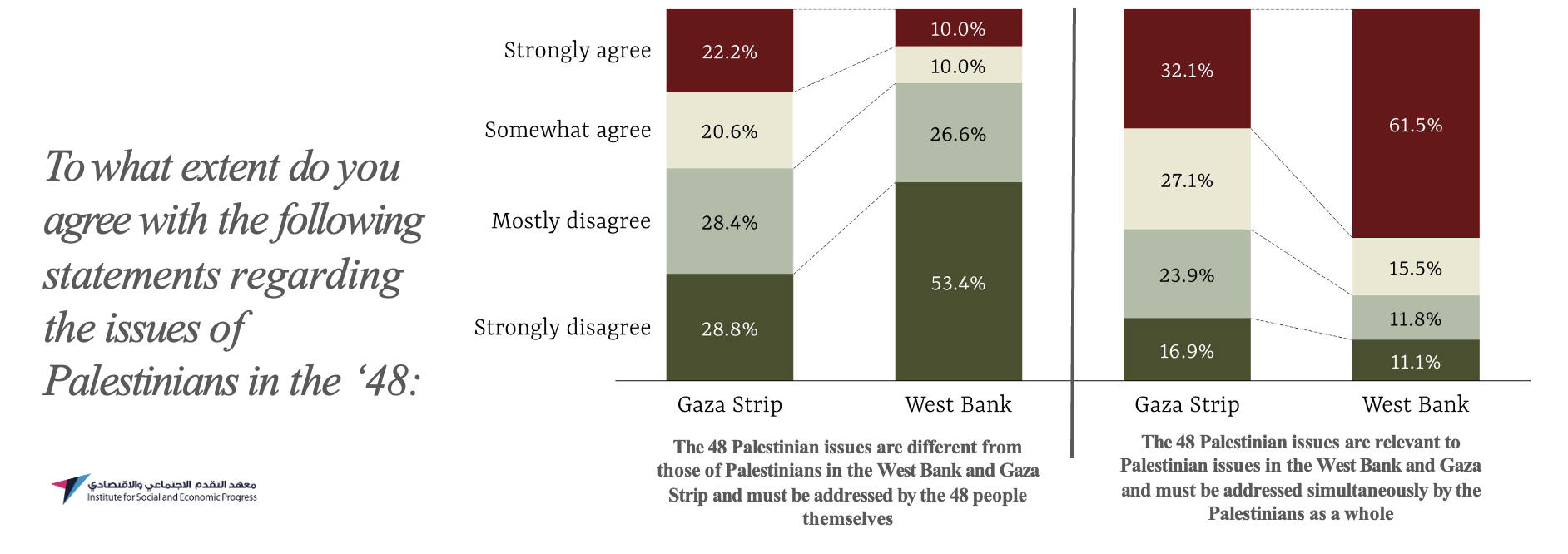
Majority of respondents think the ‘48 Palestinians are relevant to the Palestinian issue
…the same is true of Palestinians in the diaspora, with West Bankers overwhelmingly agreeing that they cannot be separated
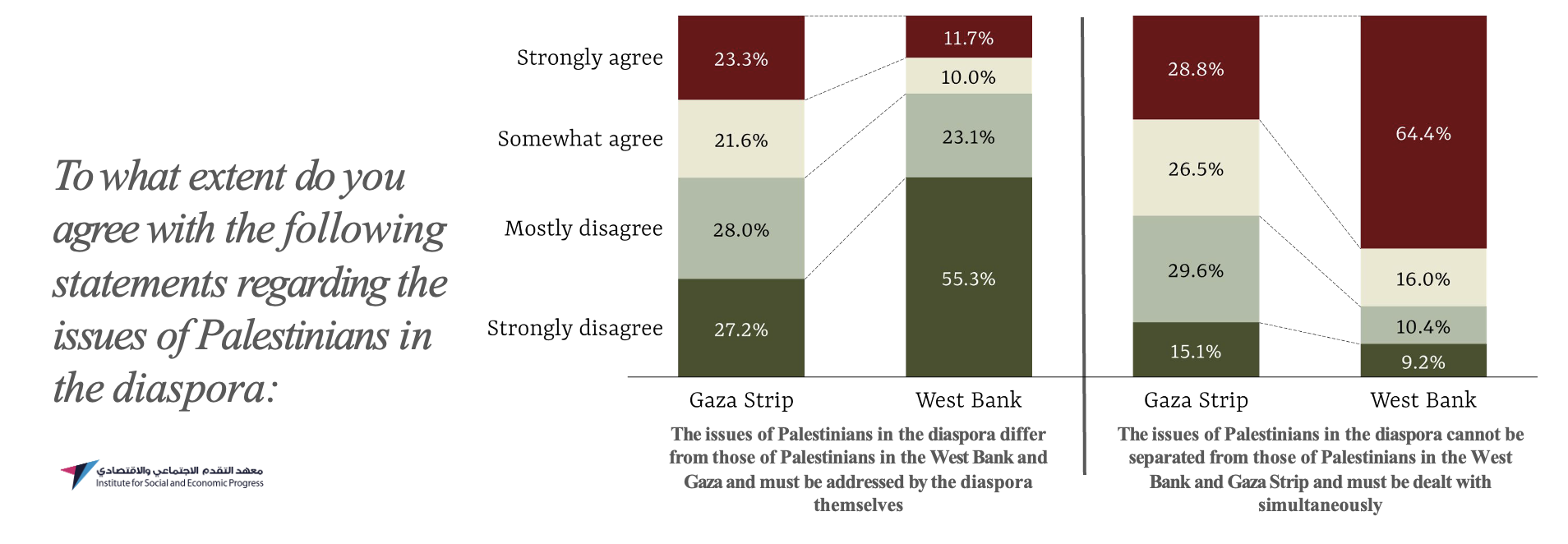
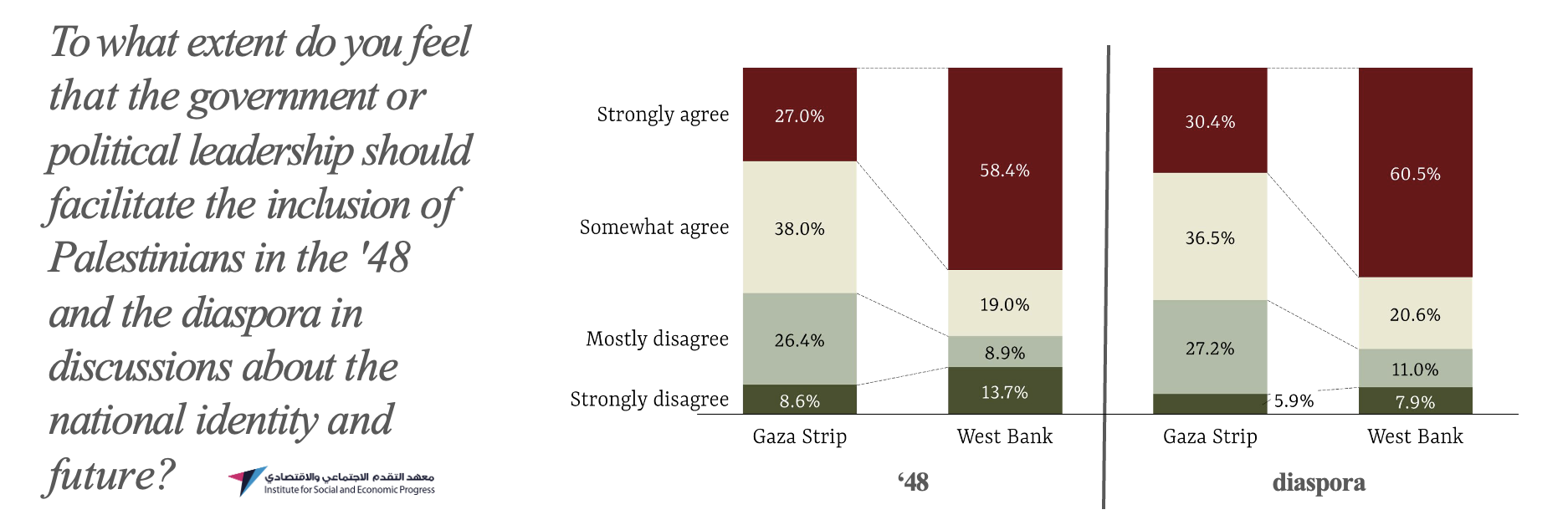
West Bankers agree more than Gazans that Palestinians in the ‘48 territories and diaspora need to be involved in national discussions